Quick Answer
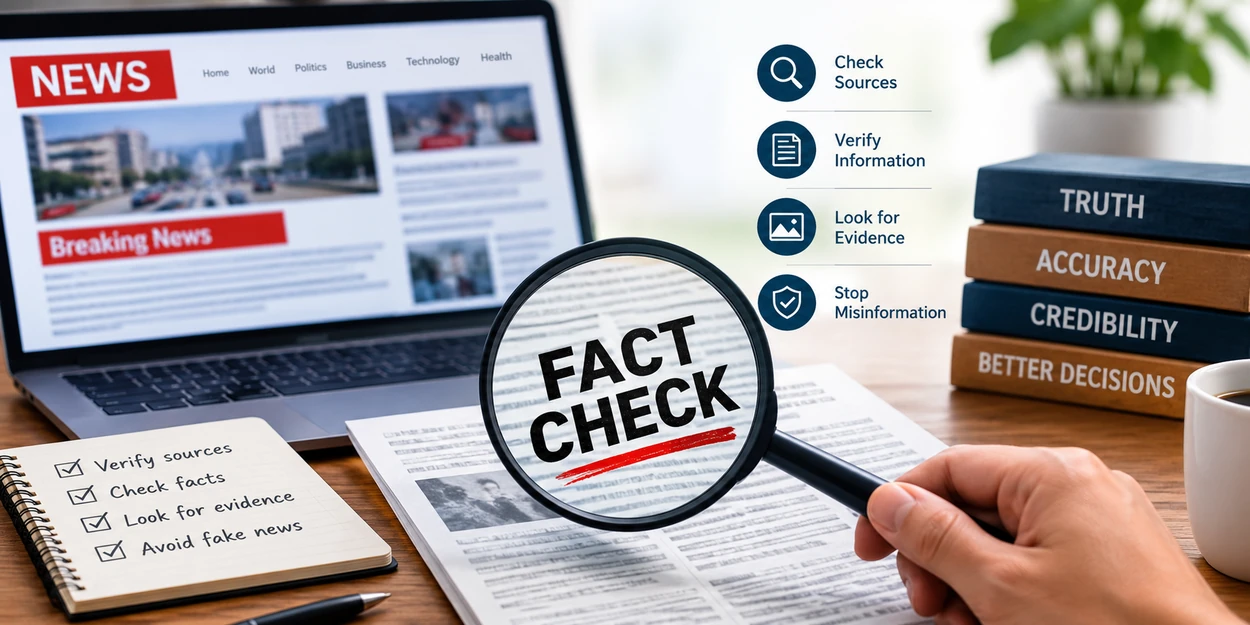
Fact-checking is essential in online journalism because it helps prevent misinformation, protects public trust, and supports informed decision-making. By verifying claims, checking original sources, reviewing images, and correcting mistakes, news organizations can provide audiences with more accurate and responsible information.
Introduction
The internet has made news available to millions of people within seconds. A major announcement, public statement, or local incident can quickly become a trending topic across websites and social media platforms. Although this accessibility has improved communication, it has also made misinformation more difficult to control.
Incorrect information can influence public opinion, damage reputations, create unnecessary fear, and lead people to make poor decisions. Fact-checking is therefore an essential part of responsible journalism. It helps journalists distinguish verified information from rumours, assumptions, and misleading claims.
1. What Is Fact-Checking in Journalism?
Fact-checking is the process of examining information before publication or verifying claims that have already circulated publicly.
Journalists may review official records, contact relevant authorities, interview witnesses, examine original documents, and compare statements with reliable evidence.
The objective is not simply to confirm a preferred conclusion. It is to determine what the available evidence supports and communicate any uncertainty honestly.
For example, when a report concerns a government announcement, journalists should distinguish between a proposal, an approved decision, and an implemented policy. These stages have different meanings and should not be treated as interchangeable.
2. Why Is Fact-Checking Important in Online News?
Preventing the Spread of Misinformation
False information can spread rapidly when users share headlines without reading the full story. Fact-checking helps identify unsupported claims before they reach a wider audience.
News organizations should verify important details, particularly when reporting on crime, public safety, elections, financial matters, or emergencies.
Building Public Trust
Readers are more likely to trust a publication that explains its sources, corrects errors, and avoids exaggerated claims.
Trust is developed through consistent practices rather than attractive headlines alone. Transparent reporting allows audiences to understand how information was gathered and why a conclusion was reached.
Protecting Individuals and Communities
Incorrect reports about individuals can damage reputations and cause emotional distress. In sensitive cases, publishing an allegation as an established fact may create serious consequences.
Responsible journalists use careful language, respect privacy, and give relevant parties an appropriate opportunity to respond.
3. How Do Journalists Verify Information?
A reliable verification process involves several steps.
Check the Original Source
Journalists should identify where a claim first appeared. An official announcement, court document, recorded interview, or original research paper may provide more useful evidence than a social media repost.
Confirm Details with Relevant Sources
Names, dates, locations, figures, and quotations should be checked carefully. When a story involves public authorities, journalists may contact the appropriate department or review its published statements.
Compare Independent Evidence
Independent sources can help establish whether a claim is supported by multiple lines of evidence. However, several websites repeating the same unverified statement do not necessarily provide independent confirmation.
Verify Images and Videos
Photographs and videos can be old, edited, or taken from an unrelated event. Journalists should examine their original context, publication history, location, and date wherever possible.
Correct Mistakes Transparently
Even careful reporting can contain errors. When a mistake is identified, the publication should correct the information promptly and make significant corrections clear to readers.
4. The Role of Technology in Fact-Checking
Technology has introduced useful tools for verifying digital content. Reverse image search can help identify earlier appearances of a photograph. Video analysis tools may reveal inconsistencies, while official databases can help verify public records.
Artificial intelligence can assist with transcription, translation, and identifying claims that require further investigation. However, AI-generated answers may also contain inaccuracies or unsupported details.
Technology should therefore support, rather than replace, human judgment. Journalists must review original evidence, assess source credibility, and explain limitations when verification is incomplete.
5. How Can Readers Recognize Misleading News?
Readers can also contribute to a healthier information environment by adopting practical verification habits.
- Read the complete report rather than relying only on a headline.
- Check the date, author, and publication.
- Look for supporting documents and named sources.
- Compare major claims with credible independent reporting.
- Be cautious about emotional language and sensational promises.
- Avoid forwarding unverified messages to friends or family.
- Check whether a photograph or video belongs to the event described.
People searching for the best news channel in dehradun should assess publications based on accuracy, transparency, local relevance, and responsible reporting rather than popularity alone.
6. Fact-Checking and Responsible Local Journalism
Local news can directly influence how residents understand public services, community disputes, civic decisions, and safety concerns.
Incorrect information about road closures, government schemes, school announcements, or criminal investigations can create confusion. Verification is especially important when details are changing or official information remains incomplete.
Responsible local journalism should clearly separate confirmed facts from preliminary reports. If authorities have not confirmed a detail, the report should state that limitation instead of presenting speculation as certainty.
A publication’s credibility grows when it values accuracy even under pressure to publish quickly.
Also read: How News Channels Build Public Trust Through Responsible Reporting
Frequently Asked Questions
1. What is the main purpose of fact-checking?
Its main purpose is to verify claims using reliable evidence and reduce the risk of publishing inaccurate or misleading information.
2. How can I check whether an online news story is true?
Review its sources, publication date, supporting evidence, and coverage by other credible outlets. Consult original documents or official statements when available.
3. Can artificial intelligence fact-check news?
AI can assist with research and identifying claims, but its results require human verification. It should not be treated as definitive proof.
4. Why is fact-checking important for local news?
Local reports can affect people’s daily decisions, reputations, and understanding of public issues. Accurate information helps communities respond more responsibly.
Conclusion
Fact-checking is a fundamental responsibility of journalism in a world where information travels quickly and misinformation can reach large audiences. Verification, transparent sourcing, careful language, and prompt corrections help protect public trust. Readers also contribute by questioning unsupported claims and sharing information responsibly. Goonj Kesari supports the broader purpose of credible journalism by emphasizing the importance of accuracy, context, and informed public awareness.
About the Author